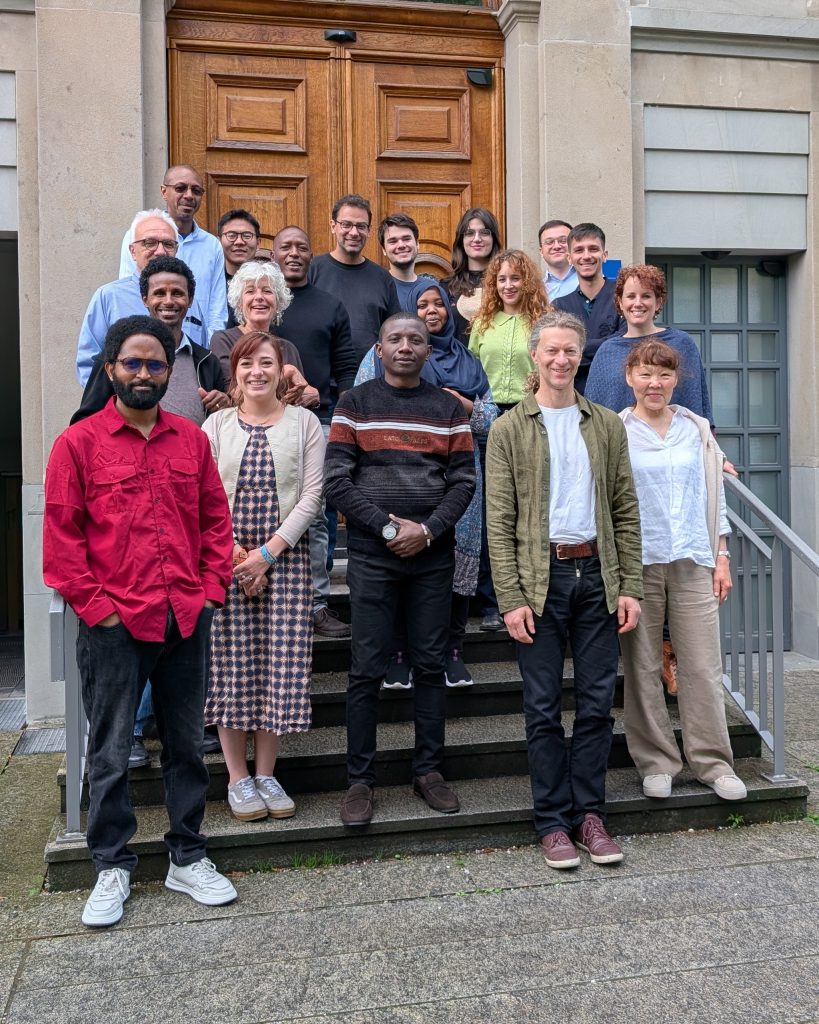
In Zurich I spent two days on the 4th and 5th of June, together with a group of about 18 people, academics, practitioners, representant of the FAO, students in anthropology and geography, discussing the future of pastoralism. 2026 is the UN year of pastoralism in which there is a call for attention for this livelihood that uses a large part of the earth’s surface in a sustainable way, as well as a call for action. The notion is that pastoralism is under threat while it is considered an important livelihood for the earth’s wellbeing. Pastoralism in its many forms is especially related to mobility. And it is this mobility that is threatened.
During these two days, we listened to presentations about pastoralists’ livelihoods that vary in their mobility styles, domesticated animals, divisions of labour, access to technology, but they share one element: the threat to their mobility. Arctic nomads, Sahelian semi-nomads, Kenyan ‘tribes’, fierce nomads in the Asian steppes of Kazachstan and Mongolia, and the mountain nomads in Romania and Switzerland, keep their pastoral livelihoods alive against all odds. They are confronted with large scale mining, climate change related ecological changes, big ranching farms with enclosed pastures, natural parks that are controlled by military, authoritarian governments that prefer modern settled lifestyles; and so on. These are the external factors, but what is happening in the nomadic pastoral societies?
The presentations during these two days emphasized how pastoral lifestyles are in harmony with nature, have a long history of ecological management in an equilibrium way, have lived through crises and always returned to their livelihoods as pastoralists. However, this is not the whole story. It is a story that refers often to the indigeneity of nomads, to their traditions, and their ‘beauty’. Does such a narrative help solve the problems?
During the two days we discussed also internal changes. The social structure of nomadic societies are also under threat. Partly as a consequence of the external threats, but also because societies change and youth and older people may have different visions on how to continue their livelihoods. As we all agreed, after a crisis there is no way back to ‘normal’ as it was before the crisis. There will inevitably be adaptations. And what about the youth, young people. Do they want to continue their lives as nomads? This questions opened a discussion on the fact that there are increasing numbers of young people who move to towns, who search life in education, or who simply no longer want to be a nomadic pastoralist. This seemed true for the case of Mongolia to the case of the Sahel. Probably an exception is the nomads in the arctic.
An important topic in the discussions was the relation between nomads and wild animals. A clear example is the situation nomads are confronted with in Romania. Here European policies to protect wild animals, and the needs and ways of nomads to interact with these animals, end up in a certain violation of the nomadic pastoral way of life. The protection of the bear was taken as an example. In the Romanian Carpaten nomads have been able to live with the bear, even if they had to kill sometimes. Now a protected animal the bear has free room to multiply and to live on the resources they share with the animals of the nomads. The pastoralist ultimately will loose its access to pastureland to the bear. Not only because the bear multiplies, but also because to protect the bear the creation of a nature reserve is in the making prohibiting any use of these lands by human society. The nomadic pastoralist will be derived of his/her living.
Online: another changing factor
Pushed by the external factors of crisis and end of mobility, that gives simply less space to nomadic pastoralism and the youth is not always able to take up where their parents leave. But certainly also related to another factor, that is technological changes. We discussed the increasingly advancing digital communication. The mobile phone and the smartphone reach out the often remote regions where the nomads herd their animals. The consequences are visible in the nomadic lands. In the presentation on the Sahel the digital communication is seen as a major factor in the way youngsters perceive their future. They see how life can be elsewhere, and they get into contact with people who explain their difficult position in relation to the state, opening up new horizons in knowledge. Is this one of the reasons that nomadic youngsters in the Sahel do join armed groups, rebelling against the state and elites? Or is it the young deprived youth who join, but for a similar reason as they are seduced by the idea to fight for their freedom and they will earn money and prestige.
Information is crucial also in the pastoral world. The digital has opened up so many possibilities for NGOs who want to ‘develop’ nomadic pastoralism, for instance in the sharing of information on pasture conditions, the weather and market prices for the animals, through a network of digitally connected people. However an interesting conclusion that came from the presentation on crisis management of the Rendille in Kenya, where the sharing of information is a strategy related to the conditions of life at that specific moment in time. In times of drought families will keep information for themselves, as this information on pasture, rain, water is their capital to survive. The NGOs happily sharing all this information are breaking a rule and may consequently push more nomads to the edge than when information was kept secret. The digital spread of information then can be a disaster. In times of abundance knowledge about conditions for cattle is less important and sharing is then seen as a good thing, though in fact then it is less important for survival!
The arctic nomads are part of regimes that brought connectivity to their regions, but with different aims. In Russia the nomads are not at ease with this development as they feel controlled by the state. Then the digital connectivity adds to the other factors that limit their mobility. On the contrary the nomads in Finland, Norway and Sweden have used the digital to develop apps that help them to herd their animals, to know their condition, etc. Apps that replace part of the work of the herder. These advanced uses of the digital connectivity are also increasingly practice in other parts of Europe, both West and East. Often also help reduce the impact of herding on the environment.
The digital environment in relation to the way young nomadic pastoralists view their world, develop digital strategies, or feel controlled, or join rebel groups to fight oppressing states and elites are showing the internal changes in nomadic society that interact with the external forces limiting mobility.
What can researchers do?
A final discussion was about the narrative that should be told. The research done by so many anthropologists, geographers that tells the human side of the story of nomadic pastoralism, seems to be enclosed in anthropological and geographical journals that repeat the same story in increasingly alarming terms. From these journals the stories do not travel to other circles and hence the stories about nomads through the eyes of nomads are hidden. These stories however should reach out to policy makers, showing the pastoral ontologies, their responsible use of land, their contribution to keeping wildlife in balance, etc. But also, the deep changes in society, exactly because of the end of mobility. Changes that can be labeled cultural genocide, of which the eviction of the Maasai of their land is such a sad example. The people at the workshop know the external forces, they understand internal changes, they see how their findings do not reach out to policy makers, or inform NGOS.
One solution was the presentation on modelling. The important case put forward was that our ethnographic data are indeed important to know, to see in-depth how the end of mobility is not only bad for the nomads, but also for the pasture areas of the world. What if we can model our ethnographic data, and develop scenarios? Would such language be a better tool to reach out to policy makers? Another proposal that came to the fore is that we need to understand more about the present day changes in these societies for instance as we have discussed for the increasing presence of digital communication infrastructures. The consequences of European policies of nature conservation and the protection of wild animals, has its severe effects in Africa and the funding of national parks, and in Europe and the protection of the wolve and the bear. The stories of humanist researchers have to reach out, and we should work on this. Modelling is one, becoming more activist another, and the third is mingle with other disciplines and not shy away of showing ethnographic data as important and accessible for others. Here I touch on a serious problem: the way ethnographers protect their data, and do hardly allow sharing will not further the case of the people with who we co-create knowledge. We will need to search for open archives of ethnographic data to be able to communicate and share with other disicplines, with attempts to modelling, to finally get a place in the influencers’ worlds of policy makers.