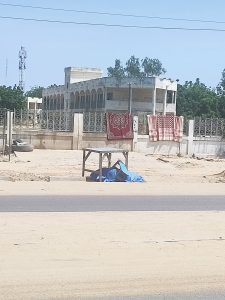
©Bruno, septembre 2026
Mbairamadji has packed his bag. His notebooks are new. But he still doesn’t know if he will go to school. October should be a month of joy for Chadian children. After several weeks of vacation, the streets are once again filled with uniformed schoolchildren. New bags hang from their shoulders, blank notebooks are neatly put away and parents hope to see their children go back to school.
Mbairamadji, a young student in the 2nd grade at the Lycée de Gassi, is also waiting for this moment. He wonders which class he will be assigned to. Who will be his teacher? Will he meet his classmates? Will he meet new students? So many small questions that are part of a child’s school life. But in Chad, another question has settled into the ritual of the start of the school year: “Are teachers going to strike?” This is perhaps one of the most revealing questions about the malaise of our education system.
When the strike becomes a back-to-school habit
Almost every year, the same scenario seems to be emerging. Teachers express their demands. Unions mobilize. The government responds. Negotiations begin. And sometimes, the classrooms remain silent. The start of the school year, which should symbolize the beginning, then becomes a time of waiting. Parents wait; teachers wait; the government waits. And in the meantime, the children are waiting too. The difference is that the children are not participating in any negotiations. Mbairamadji knows nothing about memoranda of understanding, budget constraints, or discussions between unions and authorities. He only knows that he has to go to school.
Behind the strike, there are also teachers.
However, it would be too easy to make teachers responsible for all the ills of Chadian schools. A teacher is first and foremost a worker. He has a family, expenses, debts, and needs. When his salary is difficult to pay, when it no longer corresponds to the cost of living, or when his working conditions become difficult, he has few means left to make himself heard. The strike then becomes a means of pressure. We can discuss its duration, its timetable, or its consequences. But we must also hear the reasons that lead teachers to interrupt their work. The real question may lie elsewhere: Why do we have to wait for schools to close for the problems of education to be taken seriously?
A tug-of-war for which the child pays the price
The problem arises when the conflict between the institutional actors turns into a cycle. A strike is called. Negotiations begin. A compromise is found. Classes resume. Then, sometime later, the same demands return. This cycle ends up producing a form of collective weariness. Teachers feel compelled to start again. The government must negotiate again. Parents are worried. And students are losing school days.
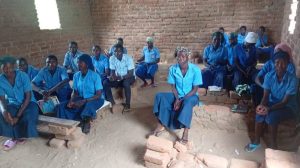
Image, Facebook 5 april 2025
Who ultimately pays the price for this repetition?
Mbairamadji. The one whose parents sometimes borrowed money to buy school supplies. The one who may have traveled several kilometers to reach his school. The one who dreams of becoming a doctor, teacher, engineer, agronomist, journalist or simply having a job that allows him to live with dignity. For him, each week of classes lost is not just a statistic. It is learning time that disappears.
The silence of the school is also a political issue
Something profoundly paradoxical lies in this situation. Everyone says that education is a priority. Everyone talks about young people’s future. Everyone recognises that school is essential to the country’s development. But when the start of the school year arrives, school can once again become the ground for a tug-of-war between the different actors.
We then end up wondering whether the repetition of strikes has not become the symptom of a deeper problem: the collective inability to build a sustainable mechanism for resolving school conflicts. It is not enough to negotiate when the crisis breaks out. We should be able to anticipate. It is not enough to sign agreements. We should be able to follow up on them. It is not enough to promise improvement. We should be able to measure the progress made. And above all, discussions about school should not only begin when students are already in front of closed doors.
What if we started by listening to those who are waiting?
Maybe we should move our gaze slightly. Instead of looking only at the government and the unions, let’s look at the child. Let’s look at Mbairamadji. His bag is ready. His notebooks are new. His parents have made sacrifices. He’s ready to learn. But he’s waiting. He’s waiting to know if his school will open. He’s waiting to find out if his teacher will be there. He’s waiting for the adults who decide his future to find common ground.
How many more school years will we have to live like this?
The question is not who won or who lost the next tug-of-war. Because when the school closes, there is no real winner. There are only children waiting. And behind every child who waits is a part of Chad’s future. Mbairamadji is not asking for a memorandum of understanding or a promise. He is simply asking for one thing: to open the door of his school. Perhaps it is time for this simple request to become the starting point for a national reflection on Chadian schools.